

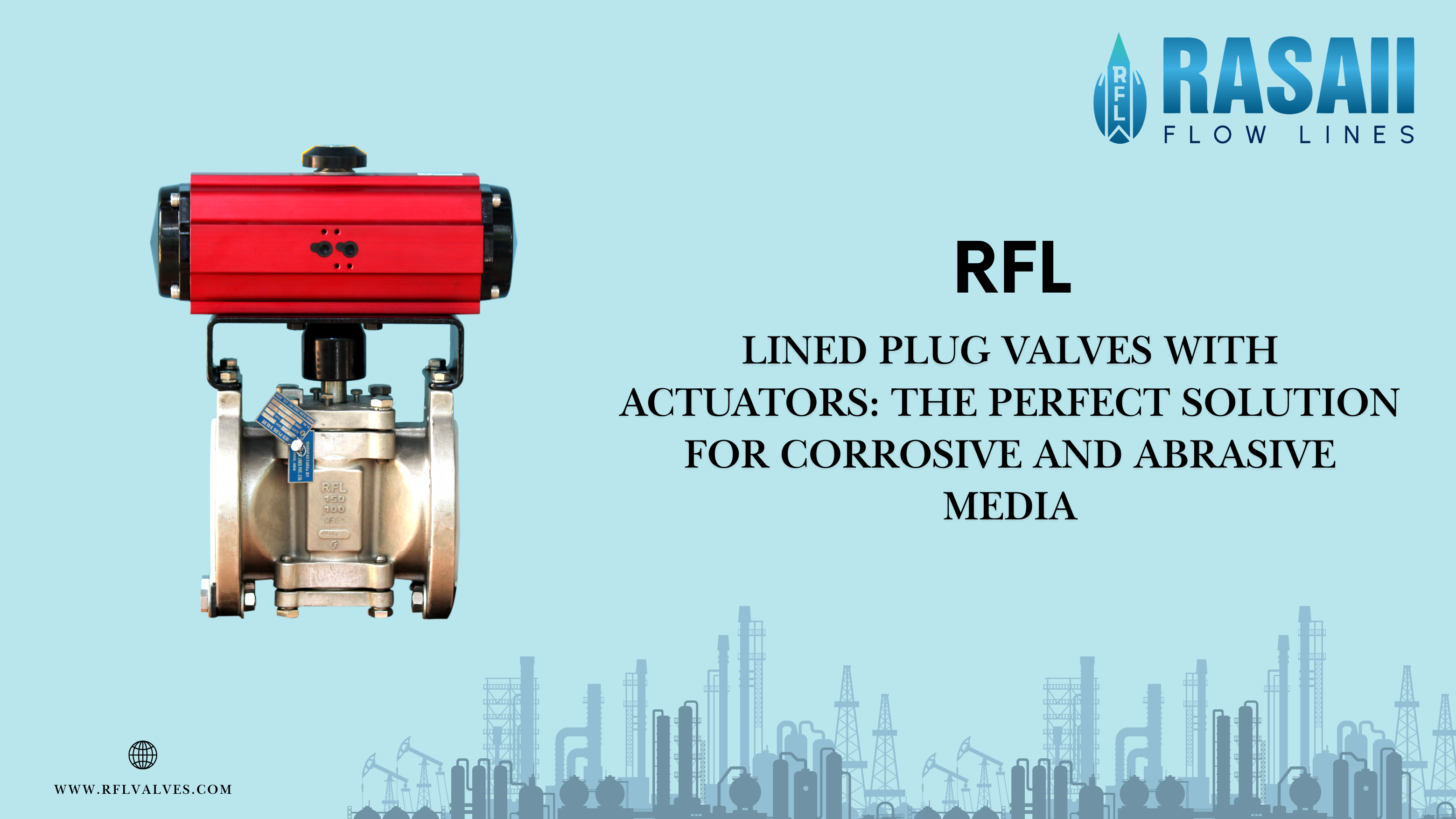
Lined Plug Valves with Actuators:
In industrial applications, valves play a crucial role in regulating the flow of materials. Among the wide variety of valve types available, lined plug valves with actuators are widely regarded as an ideal solution when dealing with corrosive, abrasive, or high-temperature materials. In this blog, we’ll dive deep into the benefits, features, and applications of lined plug valves with actuators.
What Are Lined Plug Valves?
A plug valve is a type of valve that uses a cylindrical or tapered plug to control fluid flow. The plug can either be rotated to allow or block the flow, or it can be moved linearly, depending on the design. When the plug valve features a lining, typically made of a corrosion-resistant material like PTFE (polytetrafluoroethylene), it is designed to handle harsh media such as chemicals, acids, or slurries.
The lining acts as a protective barrier between the internal components of the valve and the fluid flowing through it, preventing damage caused by corrosion or abrasion. Lined plug valves are essential in industries where corrosion is a major concern, such as in chemical, pharmaceutical, and wastewater treatment facilities.
Adding Actuators: A Powerful Automation Solution
While a plug valve’s manual operation offers simplicity, adding an actuator provides significant advantages in terms of automation and control. An actuator is a device that enables remote operation of a valve, eliminating the need for manual intervention. Actuators can be electric, pneumatic, or hydraulic, depending on the specific requirements of the application.
When paired with lined plug valves, actuators improve operational efficiency by allowing precise control over the flow, reducing the risk of human error, and enabling integration into automated control systems. This combination enhances productivity, reduces downtime, and increases safety.
Key Benefits of Lined Plug Valves with Actuators
-
Corrosion Resistance
The lining material protects the valve components from corrosion, making it ideal for handling aggressive chemicals, acids, and other corrosive substances. This extends the lifespan of the valve, reducing maintenance costs and increasing reliability. -
Handling Abrasive Fluids
Lined plug valves are well-suited for handling abrasive media such as slurry or particles suspended in liquid. The lining helps to reduce wear and tear on the valve, which is especially important in industries like mining and wastewater treatment. -
Leak Prevention
Lined plug valves, due to their tight sealing capabilities, help to prevent leaks. When combined with actuators, they provide consistent and reliable performance, ensuring that the media does not escape, even in demanding environments. -
Easy to Operate and Maintain
The addition of an actuator allows for precise control and operation of the valve. This reduces the need for manual valve operation, which is especially beneficial in dangerous or remote environments. Actuators also allow for remote monitoring and diagnostics, simplifying maintenance. -
Wide Range of Applications
These valves are used in a variety of industries, including:- Chemical Processing: Handling aggressive chemicals and acids.
- Pharmaceutical: Ensuring contamination-free fluid flow.
- Water Treatment: Managing wastewater and corrosive fluids.
- Oil and Gas: Controlling the flow of crude oil, gas, and other products.
How Do Lined Plug Valves with Actuators Work?
The basic operation of a lined plug valve is simple: as the actuator is powered, it rotates or moves the plug within the valve body, opening or closing the valve. The plug, which has a hole or port through the center, is positioned in such a way that when rotated, it either allows the flow of fluid or blocks it.
With an actuator in place, this process is fully automated, providing faster and more accurate control over the valve’s operation. This system is highly beneficial in industries that require constant and reliable control over fluid flows, such as in chemical processing or oil refineries.
Choosing the Right Lined Plug Valve with Actuator
When selecting the right valve and actuator combination for your system, several factors must be considered:
- Material Compatibility: Ensure that the lining material is compatible with the chemicals or fluids being handled.
- Pressure and Temperature: The valve and actuator should be rated for the pressure and temperature conditions of the application.
- Size and Flow Requirements: The valve should meet the specific flow capacity and size requirements for the application.
- Actuator Type: Choose an actuator based on whether you require electric, pneumatic, or hydraulic operation.
Conclusion
Lined plug valves with actuators are essential in many industries that require precision, reliability, and resistance to harsh operating conditions. These valves provide an efficient solution to manage corrosive and abrasive fluids while offering ease of operation and reduced maintenance costs.
With their ability to automate flow control, they not only streamline industrial processes but also contribute to overall safety and operational efficiency. If you’re dealing with aggressive media in your system, consider upgrading to lined plug valves with actuators to enhance your operations.